- Visitors
- Researchers
- Students
- Community
- Information for the tourist
- Hours and fees
- How to get?
- Visitor Regulations
- Virtual tours
- Classic route
- Mystical route
- Specialized route
- Site museum
- Know the town
- Cultural Spaces
- Cao Museum
- Huaca Cao Viejo
- Huaca Prieta
- Huaca Cortada
- Ceremonial Well
- Walls
- Play at home
- Puzzle
- Trivia
- Memorize
- Crosswords
- Alphabet soup
- Crafts
- Pac-Man Moche
- Workshops and Inventory
- Micro-workshops
- Collections inventory
- News
- Researchers
- Technical Solutions for the Photographic Documentation of Cultural Heritage
News
CategoriesSelect the category you want to see:
Magdalena de Cao to Once Again Host an International Mural Art Gathering ...
Explore El Brujo Through Virtual Tours: Culture and History at a Click ...
To receive new news.
By: Edson Palomino Rojas
The “Comprehensive Cataloging Project of Museum Objects from the El Brujo Archaeological Complex”, a collaboration between the Swiss Federal Office of Culture and the Augusto N. Wiese Foundation, has revealed significant challenges in the photographic documentation of cultural heritage. Similar difficulties are faced by other museum institutions in Peru, which safeguard a wide variety of archaeological materials.
Taking advantage of the conditions offered by this project, and with the goal of developing a clear, functional, and accessible methodology, we present technical proposals and solutions to address these limitations.
For better understanding, readers are encouraged to review previous notes on the cataloging project. Earlier (Oliva, 2025), the project’s general processes and the relevance of cataloging in museums were discussed, using the registration of archaeological ceramics as an example. Later (Solorzano, 2025), the photographic documentation of botanical material was addressed, detailing recommended image capture configurations and the importance of visual records that allow recognition of both general and specific attributes of the pieces.
Since a general overview of the project and its lines of work has already been provided, this document focuses on identifying the technical challenges encountered during photographic recording and the practical solutions adopted. Our goal is to define standardized procedures that are useful both for specialists and the general public. Optimizing digital images is not only aimed at achieving accurate visual representation of cultural objects, but also acknowledges that these images can reflect the effort invested in their transformation, based on more detailed qualitative and quantitative analysis (Pijoan et al., 2002).
Based on our experience, we have established guidelines, technical adaptations, and procedures that improve the planning and execution of photographic sessions in archaeological and museographic settings, ensuring more precise and systematic visual documentation.
What Are the Most Common Challenges in the Photographic Documentation of Cultural Heritage?
The photographic recording of archaeological objects is a field that, despite requiring strong photographic knowledge, rarely follows a rigid or repetitive logic. Far from being a mechanical task, this work constantly faces new challenges due to the wide variety of materials, shapes, and sizes of cultural artifacts. Each piece requires particular attention, demanding that the team be prepared to solve unforeseen situations efficiently.
Within our project, we identified two main challenges:
- Large-format pieces: Documenting elements that exceed conventional sizes, requiring spatial and technical adaptations.
- Objects with irregular morphology: Recording pieces with uneven relief, which complicated lighting, focus, and the capture of details.
Below, we describe the solutions we implemented to overcome these difficulties. We hope these practical resources will be useful for other teams facing similar challenges in their photographic cataloging processes.
Panoramic Photography for Large-Format Cultural Objects
During documentation, one particular challenge was photographing large-scale pieces, especially those longer than 1.5 meters. In these cases, the optimal distance between the camera and the object was lost, negatively affecting image quality. This was due to several factors: loss of detail at a distance, lower resolution, and object distortion at the photo edges caused by lens angle. These difficulties compromised our main objective: achieving optimal-quality photographic documentation with efficient time use.
To solve this, we implemented panoramic photography, merging several segmented shots of the object. This technique allowed us to capture the entire piece without compromising shape fidelity or detail quality. The process involved two stages: section-by-section photographic capture and digital editing/assembly in specialized software.
Section-by-Section Photographic Capture
We used a semi-professional camera (Nikon D5600) with a 50 mm lens. Lenses of 50 mm or higher are recommended, as they minimize edge distortion compared to wide-angle lenses.
We also used a 2-meter tripod and colored pins as reference markers, which ensured proper image overlap and scale, reducing deformation during editing.
Steps included:
- Place the object on a background that contrasts visually with it.
- Distribute markers along the piece, ensuring they do not interfere with focus but remain within the frame.
- Position the camera at a fixed height of 2 meters, aligning the focus plane with each section’s center.
- Capture images sequentially, keeping the same distance, angle, and focus.
.jpg)
Figure 1. Photographic record of a 4.6-meter-long funerary beam (EBBT00000-1166).
Image Editing and Assembly
Once captured, the images were digitally merged using Adobe Photoshop 2024 (RAW format recommended for best editing range). We also used Adobe Lightroom 2024 for RAW development.
Steps included:
- Import images via File > Load Files into Stack.
- Select all layers and align them automatically (Edit > Auto-Align Layers > Auto).
- Manually fine-tune overlaps, repositioning and scaling as needed.
- Use layer masks to soften transitions between images.
- Adjust lighting and color with adjustment layers (Levels, Vibrance).
- Export in JPEG format for final retouching.
..jpg)
Figure 2. Adobe Photoshop tools used in the editing process.
Final Retouching and Presentation
To optimize the final presentation:
- Cut out the object with the Object Selection Tool and apply a standard background.
- Add a soft shadow using blending options, adjusting angle based on original lighting.
- Refine the shadow with Motion Blur and Gaussian Blur for a natural finish.
This process yielded a high-fidelity panoramic photograph that preserved proportions and detail, ready for cataloging and research use.

Figure 3. Panoramic photography processes of a funerary beam (EBBBT00000-1160).
Focus Stacking Technique for Cultural Objects with Complex Morphology
Unlike oversized objects, the main challenge for some archaeological pieces is their heterogeneous surfaces and irregular volumes, which make it difficult to keep the entire object in focus in a single image.
Even with reduced aperture settings (f/8–f/16), there are physical limits. Very narrow apertures (beyond f/16) reduce light and overall sharpness due to diffraction.
To overcome this, we applied focus stacking (Roca et al., 2018): capturing multiple photographs of the same object, each focused on different sections, and then digitally merging them into a single, fully focused image.
Photographic Capture
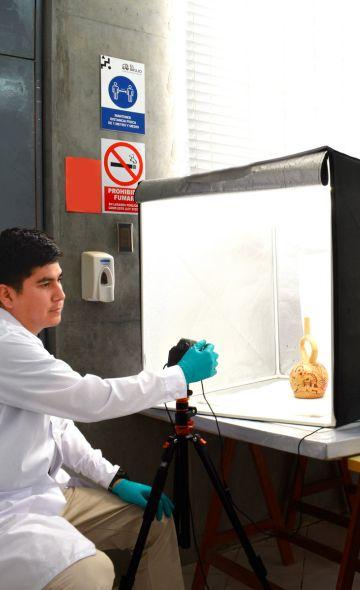
Using a Nikon D5600 with an 85 mm macro lens, mounted on a tripod with directional lighting and a non-reflective neutral background, we followed this process:
- Set the desired viewpoint (frontal, lateral, top, perspective).
- Illuminate with at least two lateral lights; ideally, add top and bottom sources to minimize shadows.
- Capture sequential shots, shifting focus progressively from the nearest to farthest areas using Nikon Camera Control Pro 2.
Editing and Image Combination
In Photoshop:
- Import all images into a stack.
- Use Edit > Auto-Blend Layers > Stack Images.
- Refine masks manually, ensuring uniform sharpness across the object.

Figure 4. Detail of the before and after of the Focus Stacking process on a ceramic piece.
The result: a clean, fully focused image faithfully representing the artifact’s details without distortion.

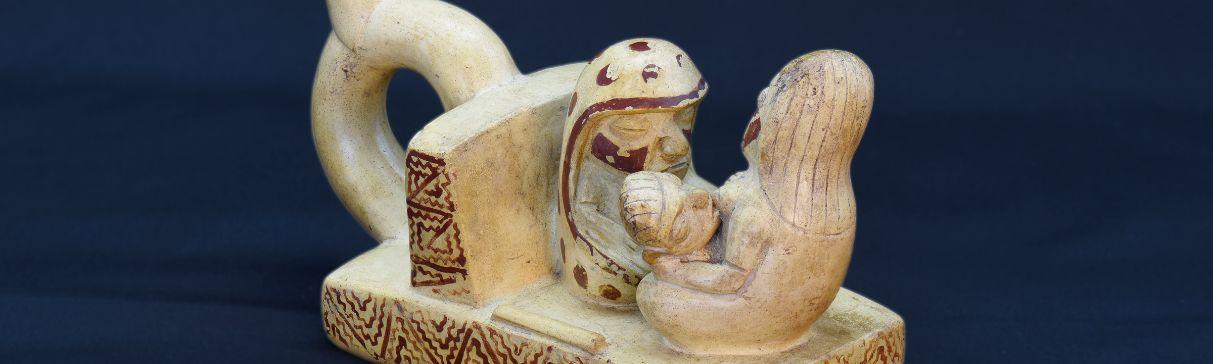
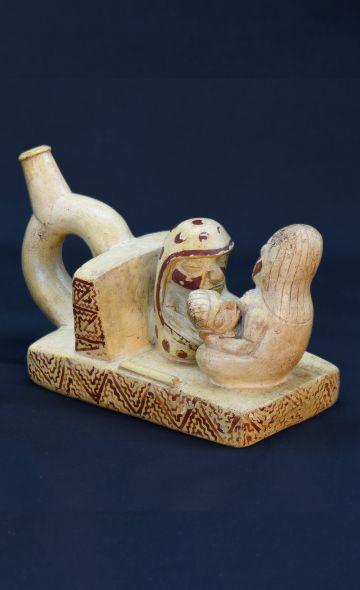
Figure 5. Photo of the piece EBBCE00000-59 after the process.
Why Document Cultural Heritage with Such Detail?
These efforts go beyond methodology. They reflect the conviction that every cultural object contains unique, irreplaceable information about past societies. Photography has been essential in preserving human memory and cultural expressions (Merino et al., 2024), making it invaluable for representing ancestral legacies.
By applying panoramic photography and focus stacking, we achieved high-detail fidelity without replacing physical observation, which remains the ideal form of study. These digital techniques are particularly useful for remote audiences lacking resources or access to the objects themselves.
Moreover, cultural objects are not eternal—degradation over time is inevitable. Cataloging is not only a technical task but also a preservation strategy.
To date, we have cataloged over 2,800 archaeological objects, applying these technical solutions to enhance heritage documentation and facilitate access through El Brujo Catalog. This initiative seeks to encourage researchers, specialists, and the general public to discover, study, share, and value the cultural heritage left by our ancestors.
References
Merino, L., Chávez, M., & Gallardo, E. (2024). The Role of Photography as Cultural Heritage According to Peruvian Photographers, Historians, and Curators. Anuario Electrónico de Estudios en Comunicación Social Disertaciones, 17(1), 1–17.
Oliva, L. (2025). Cataloging El Brujo Ceramics. Link
Pijoan, J., Barceló, J. A., Clemente, I., & Vila i Mitjà, A. (2002). Statistical Variability in Digitized Use-Wear Images: Preliminary Results. BAR Publishing.
Roca, J., Hernández, J., & Moreno, A. (2018). Focus Stacking Technique in Photography. Boletín de la Real Sociedad Española de Historia Natural, 153–154.
Solorzano, T. (2025). Cataloging the Collections of El Brujo: Photographic Documentation of Botanical Samples. Link
Researchers , outstanding news